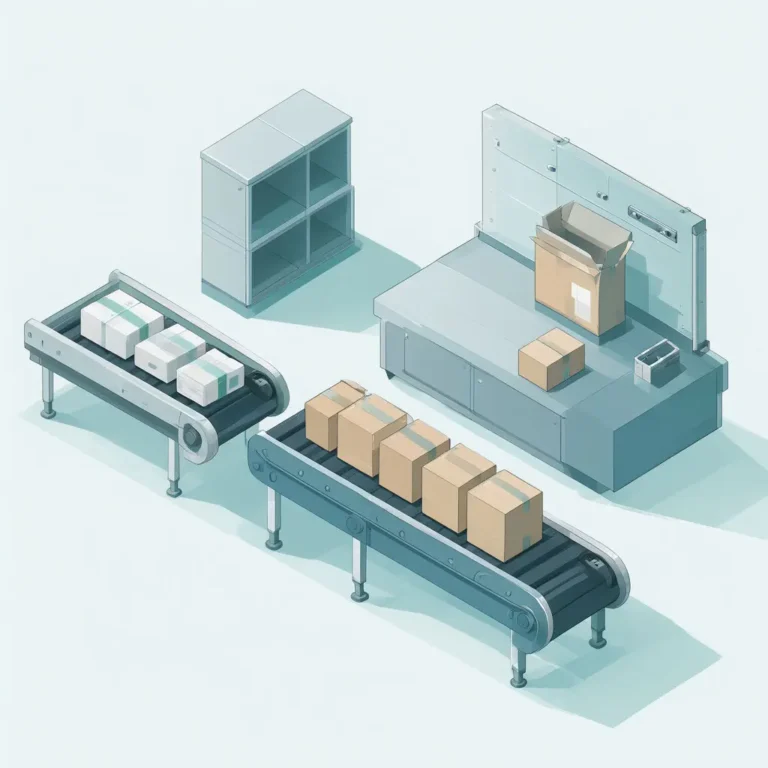

The ground under ecommerce is shifting faster than most leadership teams admit. Revenue targets still look familiar, but the way that work gets done, who does it, and which skills create value is changing at speed. AI automation in ecommerce is no longer a side project for innovation teams; it is becoming the logic that determines which roles expand, which disappear, and where the next productivity gains will come from.
For strategy executives, that shift is both a competitive opening and a workforce risk. Decisions about AI now touch capital allocation, margin structure, and the social contract with employees at the same time. This article examines how investment trends, adoption patterns, and core drivers such as personalization, operations, and backend automation are combining to restructure ecommerce work. It also surfaces the emerging controversies around disruption, risk, and long term job creation, so you can navigate the next 12 to 24 months with a sharper, more deliberate roadmap.
Retail AI investments: The 6x ROI wake-up call

AI investment in retail is no longer a pilot on the side. It’s the environment you’re planning inside.
Right now, 91% of retail leaders are investing in AI, and AI investment has increased by 33% in the past year. In the United States, 92% of retailers plan to increase AI investments in 2025, which means your competitors aren’t debating if they should move. They’re deciding how fast and where. If you’re a strategy executive and your roadmap still treats AI as a test, not a core capability, you’re already behind.
The capital is chasing a market that’s expanding fast. The AI market size in retail was valued at $8.41 billion in 2022, and projections put the retail AI market between $40.7 billion and $164 billion by 2030, supported by a 23.9% CAGR. Early adopters are positioned to capture 75% of the $164 billion retail AI market by 2030, which concentrates most of the upside in a relatively small group of decisive players.
That concentration isn’t a theory on a slide. Early adopters of AI in retail achieve 6x faster returns, which gives them more capital and internal sponsorship to reinvest and scale. Retailers expect 3 to 5x returns over 3 years, with some benefits landing much earlier. Many expect ROI in 12 to 18 months from shrinkage reduction, with shrinkage expected to drop 25 to 40%. In the supply chain, 59% of retailers anticipate positive AI ROI within 12 months. If you’re not planning around those timelines, you’re planning in the wrong cycle.
All of this sits inside an even larger technology wave. The broader AI market is projected to exceed $2 trillion in 2026. In retail specifically, current AI usage is 30% and is expected to rise to 41%, and AI for ecommerce catalogs is moving from experimentation to standard practice across core functions. That shift means “wait and see” quickly turns into “catch up at a premium.”
The story isn’t only about how much money goes into AI. It’s also about where it’s going. Retailers are concentrating spend into a few clear priority areas:
- Data integration and omnichannel unification, so decisions actually reflect a single view of the customer and inventory across channels.
- Omnichannel and personalization deployments, since AI adoption is expected to fuel these capabilities end to end, from discovery through fulfillment.
- In-house AI for marketing, with 94% of retailers planning in-house marketing AI to keep differentiation and data close instead of handing that edge to third parties.
- Agentic AI, with 68% expecting to deploy agentic AI within 12 to 24 months, which will reshape how routine tasks, decisions, and workflows get automated.
- Automated customer service, where automated query resolution is projected at 70 to 80%, which frees human teams to focus on higher value and more complex work.
At the same time, investment comes with friction. Technical debt is a barrier for 25% of retailers, which slows down AI scale and caps the impact of new tools. The gap is going to widen between leaders who treat that debt as a strategic priority and those who treat it as background noise they’ll “get to later.”
For you, the signal in these numbers is straightforward. Capital is flowing aggressively into AI, returns are showing up on realistic timeframes, and the market is rewarding early, focused movers. So the question is, how are both consumers and retailers actually adopting these tools in real journeys and operations?
Understanding that adoption picture is your next step, and it’s where the coming discussion on adoption trends becomes critical to the decisions you make over the next 12 to 24 months.
Consumer and retailer adoption: Where AI quietly restructures work
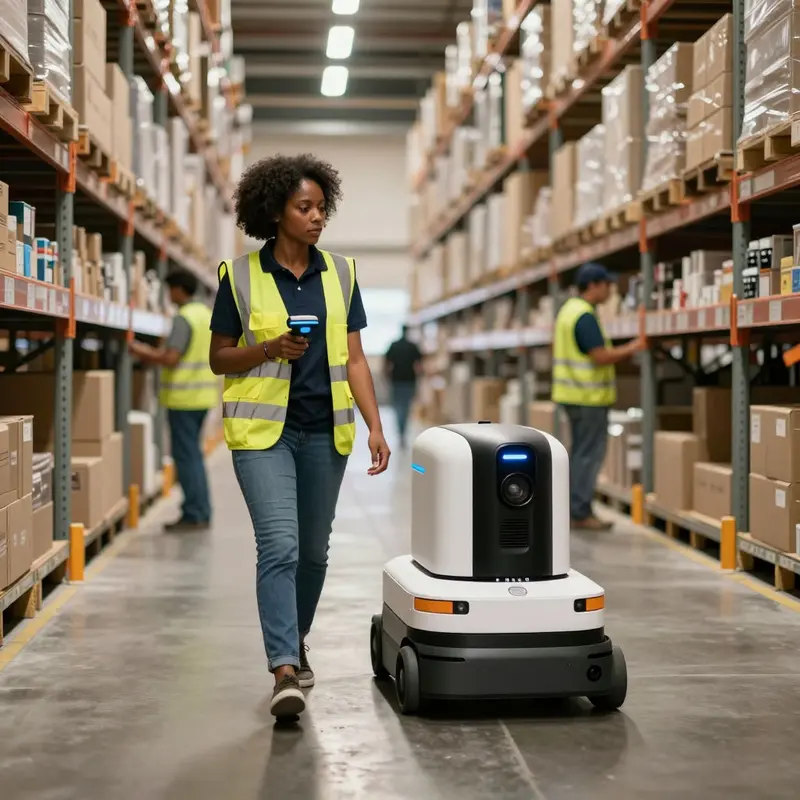
You have proof that AI returns are landing on realistic timelines. Now you need to see how those returns actually show up in the behavior of your customers and inside your own teams.
On the consumer side, AI is becoming nearly invisible but hugely decisive. Shoppers are getting faster answers, sharper recommendations, and smoother checkouts. They rarely think, “This is an AI feature.” They just gravitate to the retailers that feel easier, smarter, and more personal.
That quiet shift sits in the background of every strategic call you make about AI automation in ecommerce. Customers are voting with their clicks, their time, and their wallets. Are you matching that with how you design your AI experiences?
Inside retailers, the story looks very different. Adoption is far more visible, and the disruption is far more direct. AI is reshaping e-commerce roles by taking over routine work such as cashiering or first-line customer support. The net effect is simple to describe and hard to manage, especially as highly public AI-driven retail job cuts raise the stakes for every workforce decision you make.
Human teams are doing different work.
Fewer people are handling repetitive, transactional tasks. More people are expected to design, supervise, and improve AI-driven journeys. So the center of gravity is moving from “doing the work” to “designing and governing the system that does the work.”
You can already see the pressure in the biggest, most public decisions. Several major firms have clearly tied job cuts to AI-driven efficiencies and the need to fund them:
- Amazon eliminated 14,000 corporate roles. Leaders framed this as part of a reset toward more efficient, technology-centric operations.
- Salesforce cut 4,000 roles, with AI now handling roughly half of customer support. Humans are pushed toward more complex, high-value interactions.
- Workday reduced 8.5% of its staff while leaning further into AI to streamline internal processes.
Look at those moves together, and a pattern emerges. Retailers are not just trimming fat. They are consciously rebalancing where human effort sits in the value chain.
At the same time, AI adoption is not causing a simple collapse in retail employment. The industry is under pressure from two powerful forces at once. E-commerce growth keeps raising volume and complexity. AI efficiency gains keep reducing the need for some types of labor.
Those forces are colliding. The result is demand for new kinds of hybrid roles. For example:
- Customer experience designers who orchestrate AI touchpoints across channels.
- Logistics specialists who work with AI systems to optimize fulfillment, instead of just executing static processes.
If you own strategy, that collision should create a very specific kind of tension. Your organization feels understandable anxiety about displacement. People see headlines and ask, “Is my job next?” At the same time, you can see real opportunities to redeploy talent into roles that are far less repetitive and far more impactful.
Inflation and margin compression are speeding all of this up. AI is being rolled out to drive more efficient operations and to free up budget for reinvestment in growth, experience, and innovation. The core risk is not that you adopt too much AI. The real risk is that you adopt it without a clear plan for which human capabilities you want to amplify.
In practical terms, here’s the key insight. AI adoption is already restructuring work, not just enhancing it at the edges. Your next challenge is to be explicit about how personalization, operational redesign, and backend automation will drive that restructuring in your own model.
Where, exactly, do you want humans to matter more? That’s the question we turn to next.
Key drivers: How AI asks more of fewer roles

You already named where you want humans to matter more. Now you have to face the flip side: where AI is going to do the heavy lifting in your ecommerce model.
For ecommerce strategy leaders, three forces are quietly rewriting job descriptions: personalization, operations, and backend automation. Those three explain why routine cashiers, data entry staff, and assembly workers are disappearing, while new hybrid roles show up in their place. AI is not just trimming costs at the margins. It’s rewiring which skills your organization actually values.
Start with personalization.
By 2026, AI-driven marketing personalization is expected to trigger role changes for 65% of CMOs. That headline number is really a proxy for what’s happening across your entire commercial stack. Campaign managers who used to segment and schedule are being pushed into very different work. They are increasingly orchestrating AI systems, interpreting outputs, and designing experiences.
The people who thrive here will look different too. They’ll be the ones who can pair genuine customer insight with real AI literacy, then explain in plain language why the machine is recommending a particular journey. In other words, they’re translators between the model and the market.
On the operations side, the numbers get even starker.
E-commerce operations automation is projected to reduce roles such as cashiers and assembly line workers by up to 65%. At the same time, the same shift is expected to increase jobs in last-mile logistics and customer experience design by 90%, and robotics technician roles by 125%. Automation strips out repetitive touches in the warehouse and at checkout. Then it pushes human value to the doorstep and to the exception path where judgment, empathy, and improvisation actually matter.
Pause and map what that means in your org chart.
If you’re serious about AI automation in ecommerce, you’re really making a very specific bet on where human judgment sits. Backend automation will keep displacing entry-level white-collar work, especially in areas like data entry and routine coordination. In parallel, positions that mix AI skills with deep domain expertise are set to grow.
Roles such as AI engineers and AI risk analysts are already expected to rise, with AI risk analysts alone projected to increase by 95%. These roles demand combined fluency in personalization models, operational automation, and the ethics and risk frameworks wrapped around them, which is why every leader needs a working grasp of AI risk and ethics. You are not just hiring technologists. You’re hiring people who can see the system end to end and still ask, “Should we do this?” as well as “Can we do this?”
The platform providers are already signaling where this is going.
Amazon, Salesforce, and Workday have all linked significant 2025 layoffs to AI-induced efficiency measures. Their message to you is not subtle. As ecommerce moves toward roughly 16.1% of retail sales, leaders who invest in AI literacy and hybrid roles will capture more of that growth. Those who treat AI only as a blunt cost-cutting tool will face deeper disruption and far less control over how work reshapes.
So where does that leave you?
The key drivers of personalization, operations, and backend automation are already redistributing labor toward AI-literate, hybrid roles that sit closer to both the customer and the machine. The next step is to confront the hard questions these changes raise about risk, fairness, and long-term direction. That’s where the emerging controversies and future roadmaps of AI automation come into focus, and where your choices over the next few planning cycles will matter most.
Emerging controversies: Where AI reshapes e-commerce work

You have already seen how AI is pulling work closer to both the customer and the machine. Now you need to face a tougher question. What does that really mean for the people and profit lines you own?
The first controversy sounds simple. It is anything but simple to manage in practice. AI automation in ecommerce is eliminating some roles at the same time it’s creating others. Job losses are piling up in functions that are easy to codify, such as cashier work and routine transactional tasks. At the same time, last-mile logistics roles in ecommerce are surging, because AI-fueled volume still needs a human hand at the doorstep.
The pattern is even sharper once you look at digital-first roles. Customer experience designer positions in ecommerce have grown by 90%. That growth signals a clear shift in value toward people who can choreograph interactions between algorithms and human buyers. You are not just re-staffing a few teams. You are redefining what it means to work in ecommerce, and who creates value in your organization.
Another flashpoint is the sheer scale of potential disruption. AI-driven automation is expected to handle 34% of all business tasks by the end of 2025. Globally, up to 300 million full-time jobs could be exposed to automation. Executives see a productivity prize and margin expansion. Workers see a direct threat to their livelihoods and future security, especially as they watch AI reshaping ecommerce jobs in real time.
Yet the longer-term roadmap is not purely negative if you are willing to take a structured view. Projections point to a potential net increase of nearly 80 million roles worldwide by 2030, driven by the creation of 170 million new jobs linked to AI. Workers with AI expertise already earn 56% more on average, and AI-enabled sectors see three times higher revenue growth per employee. The value is real and measurable, but it is unevenly distributed across roles, regions, and business models.
Major tech companies that have cut jobs while investing heavily in AI show where this is heading. They are not shrinking at random. They are reallocating capital and talent toward AI-intensive, higher-yield activities that expand revenue per employee, even while headcount goes down in other areas.
For you, the roadmap cannot stay implicit or buried in a slide deck. It needs to be explicit, operational, and tied to metrics. At a minimum, it should include:
- A clear view of which roles are at risk, which are growing, and where last-mile or design work will expand.
- A skills strategy that moves current staff toward AI-literate roles that command higher pay and drive more revenue per employee.
- A workforce narrative that is candid about exposure to automation, yet specific about where new opportunities will emerge.
- Investment criteria that link automation initiatives directly to revenue growth per employee, not just headcount reduction.
Are these moves going to resolve every controversy? No. They will not erase all the political or emotional tension around AI and work. They will, however, give your organization a credible direction of travel and a story you can stand behind. The executives who thrive in this transition will treat AI not only as a cost lever, but as a new social contract with their workforce and a disciplined roadmap for long-term growth.
Final thoughts
The picture that emerges is not a simple story of technology replacing people, but of work being pulled toward new centers of value. Investment flows show that AI is now baked into retail economics, while adoption patterns reveal how quietly it reshapes both customer journeys and internal roles. As personalization, operational redesign, and backend automation scale, a smaller number of more hybrid, AI fluent roles carry greater responsibility for revenue, risk, and customer trust.
For leaders, the real test is whether you treat AI automation in ecommerce as a narrow cost lever or as a catalyst for redesigning how your organization creates value and opportunity. That means getting specific about which roles will shrink, which will grow, and how you will move people into higher value, AI literate work with clear metrics and a credible narrative. The executives who act with that level of intent will not only protect margins, they will shape a workforce that is more resilient, more skilled, and better aligned with where ecommerce is heading next.
Ready to elevate your business with data-driven strategies and expert insights? Contact CesarFeed.com ([email protected]) today and let our team help you grow smarter, faster, and more efficiently!
About us
CesarFeed is part of OnInitiative.com, an innovative marketplace that helps e-commerce businesses boost productivity and community growth through advanced automation tools.