

If your side hustle lives in the hours after work, photo prep can eat the whole night. Which tool you pick decides how many listings actually go live before you run out of steam.
For a reseller, on-screen speed covers a single image. Speed is how many handoffs, format fixes, and repeat decisions pile up between a phone photo and a publishable listing. A tool can feel impressively fast on one image and still slow your week down once you’re doing the same job across a real batch.
Workflow speed: 1–2 tries vs manual desktop handoff

You’ve got thirty vintage pieces photographed on your kitchen table, decent natural light, phone camera, and a Sunday afternoon before the week swallows everything. The bottleneck has never been finding inventory. It’s the gap between a raw phone shot and a listing image that looks intentional enough to earn a click.
Designkit structures that gap as a deliberate sequence. You upload your photo, select a product-listing image tool, tell it the target platform and a few details about the product, and it generates a set of formatted images you can preview, refine, and download in one sitting. The same interface handles bulk uploads, so if you’ve got thirty items rather than three, you’re not repeating the process thirty times. Export resolution runs up to 4K, and the files come out sized and formatted for wherever they’re going, whether that’s collection grids, product pages, or ad banners, without a separate resizing step afterward.
Tinker approaches the same problem from a different angle. Shopify built it as a mobile app with more than 100 specialized AI tools organized by outcome, which means you pick a tool built for product photography specifically rather than configuring a general editor. You describe what you need in plain language, upload a photo if you have one, and Tinker handles the technical prompting behind the scenes. According to community feedback, most users land on results they’re satisfied with in 1–2 tries, and refinements happen within the same session without starting over, which keeps the iteration loop short once you’re inside a tool.
For a complete listing set, though, Tinker’s structure may require chaining several specialized tools together: one for the studio shot, others for lifestyle or model imagery. That’s more workflow decisions per listing, not fewer.
The more concrete friction point is physical. Tinker runs only on mobile. If your Shopify backend lives on a desktop, and for most resellers managing inventory, it does, every asset Tinker produces requires a manual download on the phone and a re-upload on the computer. A share link helps, but the handoff step exists regardless. Designkit’s browser-based workflow sidesteps that entirely, keeping capture, editing, and export on whichever device you’re already using to manage your store.
Editing capabilities: Batch consistency up to 30 photos

Where the two tools diverge most sharply is in how they handle consistency across a batch, and that difference has real consequences once you’re listing more than a handful of items.
Designkit’s approach is built around controlling every variable before you export. The bulk background remover can process up to 30 photos in a single pass, with Vision AI isolating the main subject and handling edges on things like jewelry clasps or fabric fringe that would otherwise require manual cleanup. Once backgrounds are stripped, the Bulk Background Generator applies a single chosen background uniformly across that entire batch, so 30 different products end up looking like they were shot in the same space on the same day. From there, the Product Listing Images Generator produces a full set of image types, main shot, detail frame, lifestyle frame, each sized to marketplace specs, and lets you save that entire configuration as a reusable recipe. The next time you photograph a batch, you load the recipe and the output parameters are already set, though access to the full depth of that system carries a cost beyond the initial download, which is worth knowing before you build a workflow around it.
Tinker’s consistency mechanism works differently. Batch parameters and saved recipes are how Designkit controls output across a run. Its character generator is designed to keep model and lifestyle imagery coherent across shots. You’re locking in a visual identity for how a product is presented on a person or in a scene, not standardizing a background color code across a spreadsheet of SKUs. For sellers running apparel or lifestyle goods where model continuity matters, that’s a genuinely useful tool. For sellers working through a category like electronics or collectibles where a clean studio background is the entire job, it addresses a different problem than the one on the table.
The output quality question depends on what you’re standardizing. Tinker’s editorial, lifestyle, and studio photography modes can produce polished single images quickly. Designkit’s HD and Ultra HD upscaling handles the resolution side, and its resizing step outputs files already formatted for the destination channel, which removes a decision point from the end of the process. When you’re closing out a Sunday session with thirty items to list before the week starts, that removed decision point is the one that actually matters.
Integration and output readiness: Pre-formatted exports vs manual handoffs
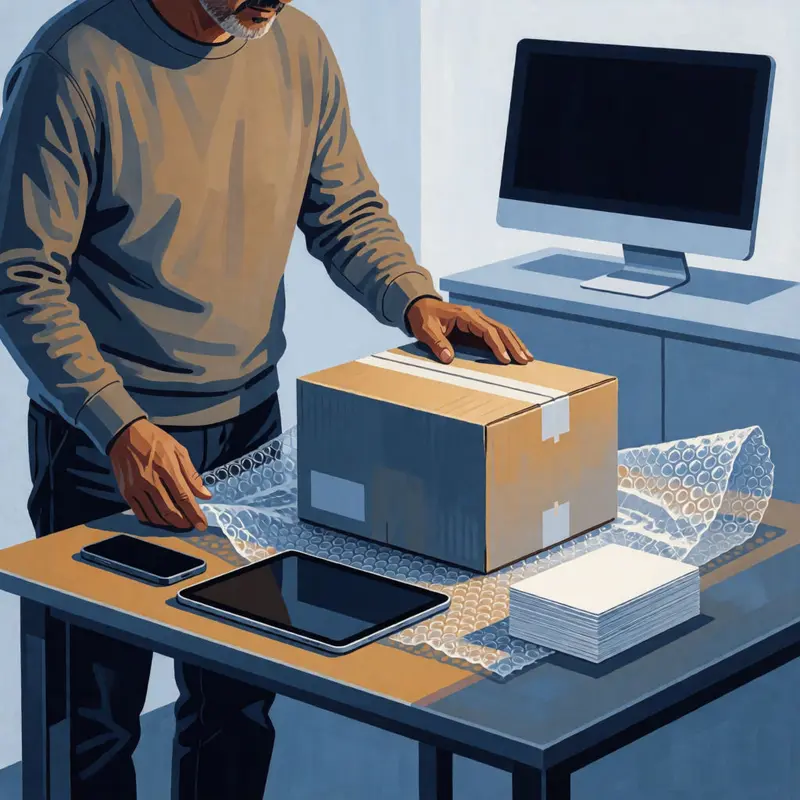
Getting images out of a tool in the right format, at the right resolution, pointed at the right destination is where workflow speed either compounds or collapses.
Designkit gives you explicit control over all three variables. On the resolution side, the product listing generator exports at 1K, 2K, or 4K, so you’re choosing the file weight that fits your upload context rather than accepting a default. Format support is similarly broad: PNG, JPG, HEIC, and WEBP all come in, and PNG or JPG come out, which covers the two formats that matter for most listing work. The more consequential detail is that the Shopify-specific editor pre-formats outputs for key storefront and ad placements, so the file arrives in the correct dimensions for each use case without a resize step between export and upload. For Amazon and Shopify destinations, that pre-formatting is built into the export itself rather than treated as a separate production task.
Tinker’s export path runs through a different mechanism. From the mobile app, you initiate a download request, verify it with a 6-digit code, and a link arrives, typically within a few minutes, carrying your profile, artifacts, projects, and media file links. That link expires after 7 days. The structure is orderly, but what it delivers is a data export rather than a channel-ready image package. Bulk file export for a live Shopify store, pulling all product images in one action, is not a native feature of the platform; sellers who need that kind of wholesale output often find themselves relying on third-party apps or manual downloads, which reintroduces exactly the friction the rest of the workflow was designed to remove.
The practical gap shows up at the moment you’re ready to publish. Designkit’s outputs arrive pre-labeled for their destination: a white-background JPG sized for a marketplace main image, a transparent PNG ready for an ad overlay, a lifestyle variant scaled for a secondary gallery slot. The decision about which file goes where has already been made. Tinker produces strong individual images, but the hand-off from creation to channel-compliant upload carries more manual steps. When the bottleneck in your process is the gap between a finished image and a live listing, that distinction is what determines how many items you manage to publish on time.
Decision matrix: Scale, cost, and multi-platform workflow fit
The right tool is the one that fits the shape of how you actually work.
If you’re running a high-volume operation across Amazon and Shopify simultaneously, Designkit’s recipe system changes the economics of the work. You set the platform target, the style parameters, and the output resolution once, save it, and run the same configuration across your next batch without rebuilding anything. The listing image generator handles the full set: main image, detail shot, lifestyle variant, feature graphic. For sellers moving dozens of SKUs at a time, that reusability is where the time savings actually live, not in any single image but in the elimination of per-listing setup across an entire catalog.
If you’re earlier in the process, testing a few products or building your first Shopify storefront, Tinker’s proposition is harder to dismiss. The app is free, it covers more than 100 creative tools, and for a seller who needs occasional product imagery rather than a continuous pipeline, the manual download-and-upload transfer step is a real friction cost but not necessarily a prohibitive one. Cost constraints are a legitimate reason to start there, even knowing the workflow carries more hand-off work.
The scenario that creates the clearest decision is scale combined with multi-platform distribution. Designkit explicitly targets Amazon and Shopify as distinct output destinations, pre-formatting files for each channel’s specific placements. If your listings live on both, and if consistency across those channels matters to how your brand presents, the export logic is doing real production work for you. Tinker can produce compelling images, but ultimately it returns a single file. That distinction is negligible for a seller publishing one item; it compounds meaningfully across fifty.
Future-proofing the photo pipeline is ultimately a question about where your catalog is going. Tools that scale with you without requiring proportionally more effort per listing protect the margin of the operation. Designkit’s bulk generation and reusable recipe structure are built for that trajectory. Tinker is built for accessibility and creative breadth. Both are real advantages, and the one that matters is determined entirely by how many listings you’re actually trying to get live.
Final thoughts
Listing photos get ready faster when the tool removes decisions at the end of the job, not when it only generates a strong image at the start. Across this comparison, the real time cost shows up in the handoff: choosing again, exporting again, resizing again, and moving files from one device to another before a listing can go live.
That makes Designkit the better fit when your store runs on volume, repeatability, or more than one sales channel. Shopify Tinker still makes sense for lighter, lower-cost image work on a phone. But in Designkit vs Shopify Tinker, the faster system is the one that turns photo prep into a repeatable pipeline, so your effort goes into sourcing and listing, not babysitting files.